
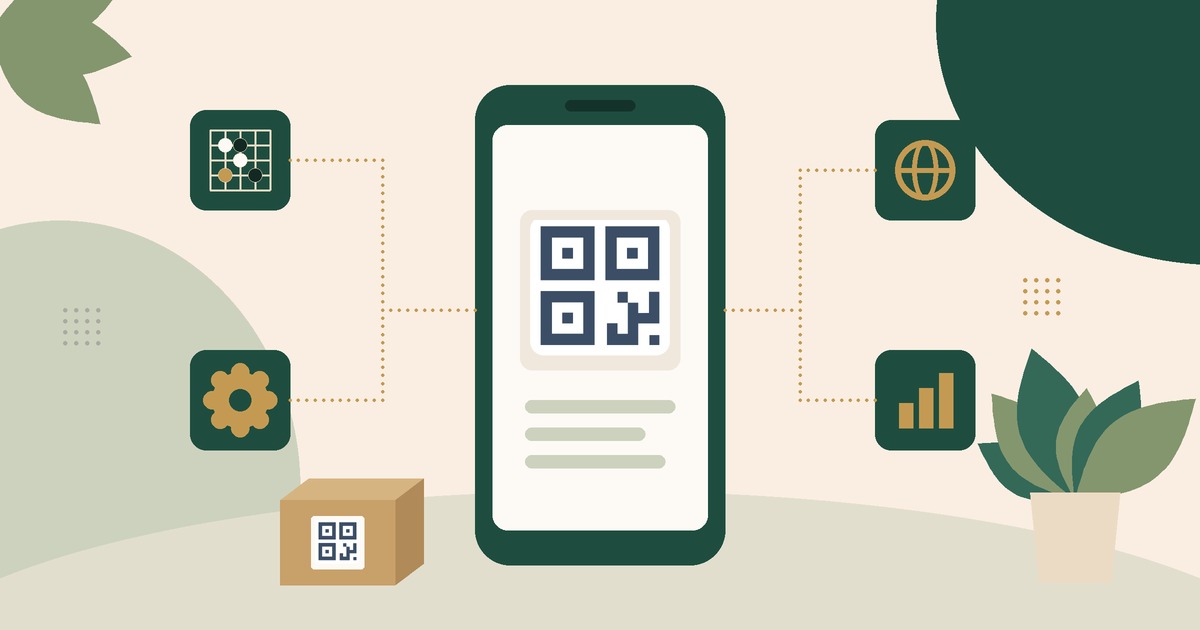
What is a QR code: the history of its creation
The QR code was born in 1994 in a Japanese car-parts factory. Learn how Masahiro Hara of Denso Wave created it, how it works, and how it became a global standard.
A QR code is a square, two-dimensional barcode that a phone camera can read in a fraction of a second. It opens a website, shows a menu, connects to Wi-Fi or saves a contact. Today it is so familiar that few people stop to ask where it came from. The story begins in a Japanese car-parts factory more than thirty years ago.
What a QR code is
QR stands for Quick Response. Unlike a classic barcode, which stores data in one direction only, a QR code stores it both horizontally and vertically. This is why it can hold far more information: up to about 7,000 digits or roughly 4,000 alphanumeric characters, and it can also encode Japanese Kanji and Kana. A traditional barcode usually holds only around 20 characters.
Who created it and why
The QR code was developed by Masahiro Hara and a small team at Denso Wave (then a division of Denso Corporation, part of the Toyota Group) in Japan. Work began in 1992, and the code was released in 1994.
The problem came from the factory floor. The automotive industry was moving to high-mix, low-volume production, and every box of parts carried more and more information. Workers sometimes had to scan around ten barcodes on a single box, and labels smudged with oil often became unreadable. Manufacturers needed a code that stored more data, read faster and survived damage. Its first major users were car makers, who used it in electronic kanban systems to track parts from production to shipping.
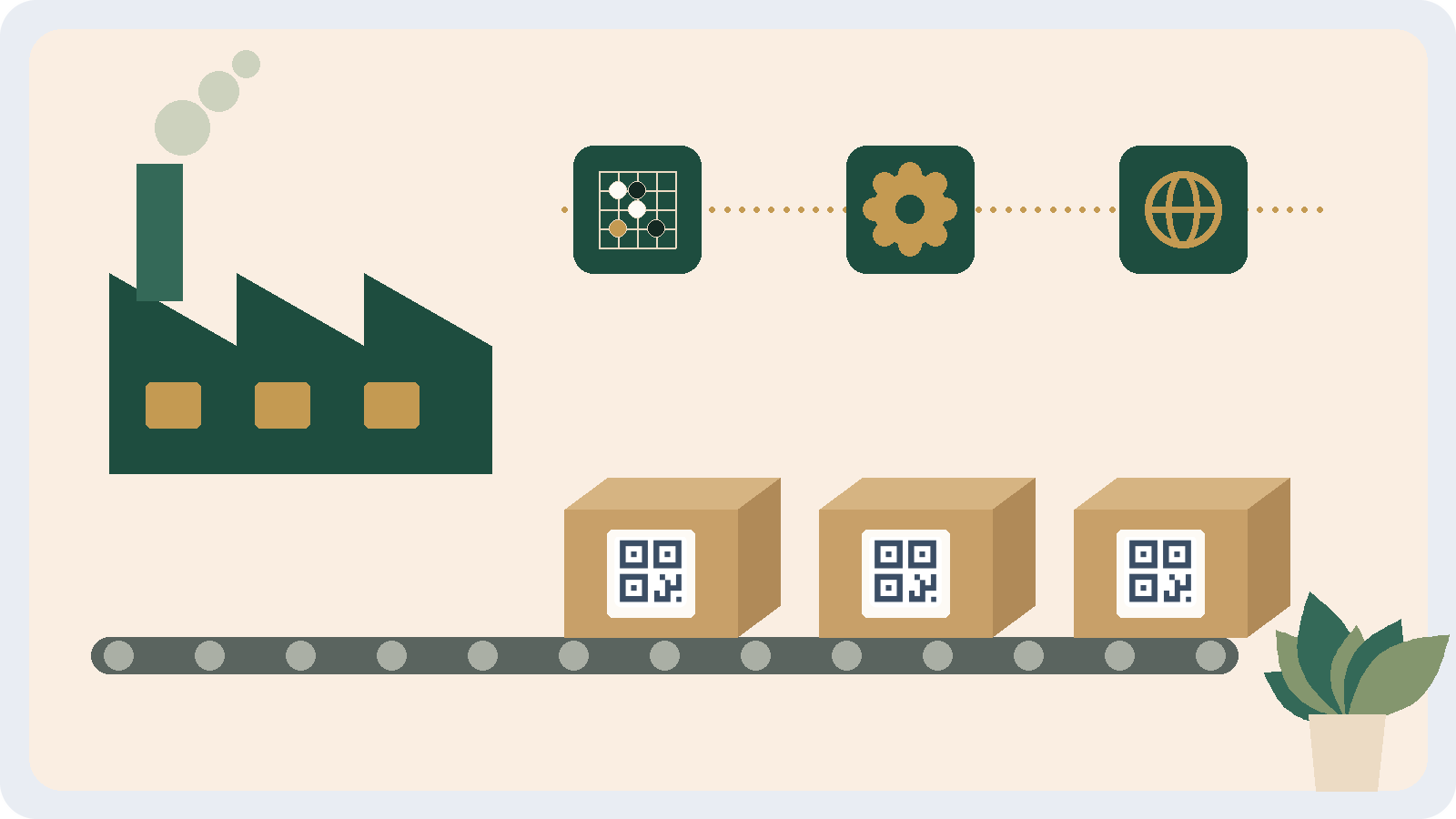
Two ideas shaped the design. The first came from the board game Go, which Hara loved: on a Go board, the position of a stone is clear from the stones around it, even if one is missing or slightly out of place. In the same way, a reader can first recognise a QR code roughly and then refine the details, so a dirty or partly damaged code can still be read. The second idea, the distinctive squares in the corners, came to Hara when he noticed a building whose upper floors had a different window pattern from the lower ones: a unique mark could tell the scanner "this is a code" instantly.
How a QR code works
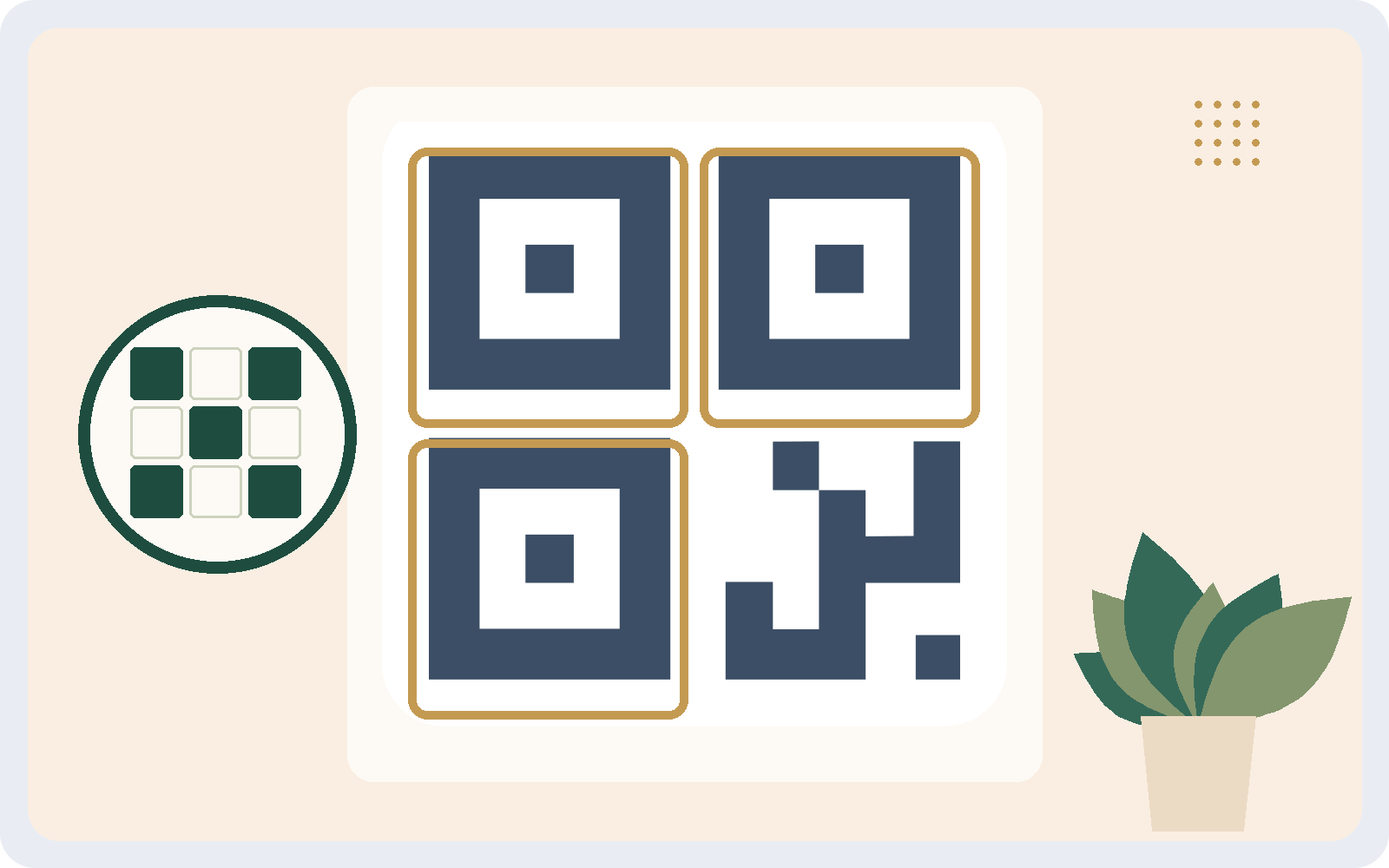
- Modules. The code is a grid of small black and white squares. Each module is one bit of data.
- Position detection (finder) patterns. The three large squares in the corners. Their black-white-black widths follow the ratio 1:1:3:1:1, which the team chose after surveying huge amounts of printed matter because it almost never appears in ordinary print. Thanks to them, a scanner finds the code and its orientation from any angle, 360°.
- Alignment and timing patterns. Larger versions include smaller alignment squares that help correct distortion when the code is printed on a curved surface or photographed at an angle. Timing patterns, dotted lines of alternating modules between the finder patterns, tell the reader the size of the grid.
- Error correction. QR codes use Reed–Solomon error correction with four levels: L restores about 7% of the data, M about 15%, Q about 25% and H about 30%. The higher the level, the more damage the code tolerates, and the more modules it needs.
What came next
Free to use. Denso Wave holds the patent but decided from the start not to exercise it and published the specification openly. Anyone could create and read QR codes without paying a licence fee, which Hara himself names as the main reason for its global spread.
Standardisation. The QR code became an AIM standard in 1997, a Japanese Industrial Standard (JIS) in 1999, and an international standard, ISO/IEC 18004, in 2000. The standard has since been revised; the current edition is ISO/IEC 18004:2024.
Phones. In 2002, mobile phones with a built-in QR reader went on sale in Japan, and the code quickly moved from factories into everyday life: links, coupons, tickets. The real global breakthrough came with smartphones. In 2017, iOS 11 let the standard iPhone Camera app recognise QR codes without a separate app, and Android phones gained similar scanning through the camera and Google Lens.
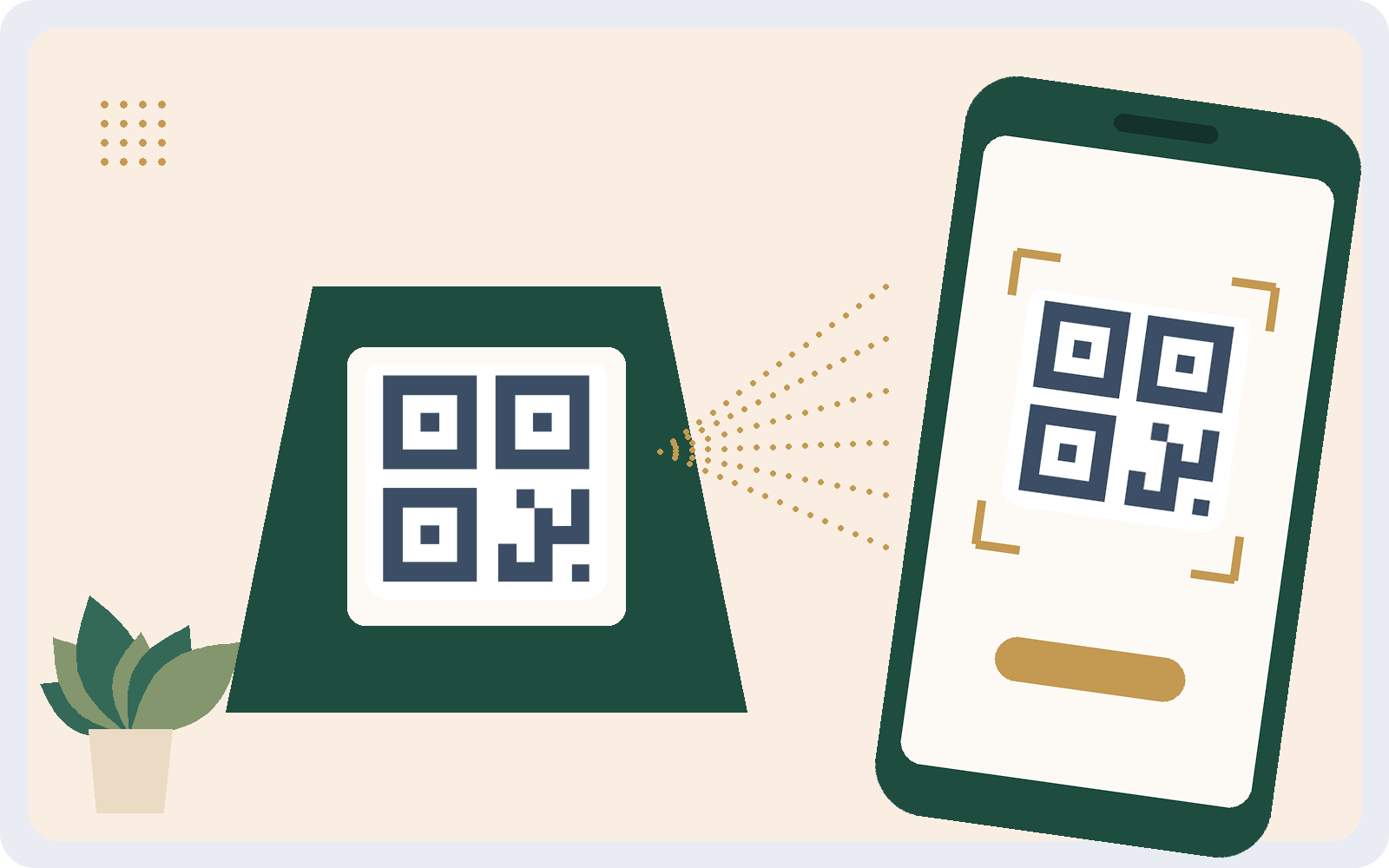
The pandemic. From 2020, QR codes became a tool for contactless service: restaurant menus, payments, check-ins and health certificates. Hara told The Guardian he was pleased the code was being used for people's safety.
Today. QR codes appear on packaging, boarding passes and event tickets, business cards, posters and outdoor ads, payment terminals, museum labels and product manuals. Industry still uses them for logistics and traceability, just as it did in 1994.
QR codes with webqr.io
A classic static QR code stores its content permanently: once printed, it cannot be changed. With webqr.io you can create dynamic QR codes. The printed code points to a short link, so you can edit its destination after printing and see scan analytics. The code on the packaging or poster stays the same while its content keeps up with your business.
Conclusion
The QR code was born from a practical factory problem, a game of Go and a careful study of printed patterns. Open access, international standardisation and the smartphone camera turned it into one of the most widely used technologies in the world. Three decades later, the same square pattern from 1994 connects the physical and digital worlds every day.